8 Benefits of Product Design Services (That Most Businesses Overlook)
Product design services provide businesses with expert engineering support, advanced tools like CAD and simulation software, and structured development workflows that reduce costs, lower risk, and get products to market faster. Whether you're refining an idea or scaling a proven concept, partnering with a specialized product design firm gives you capabilities that are impractical to build in-house.
Most companies don't fail at having ideas. They fail at executing them.
A promising concept can die in the prototype stage, get shelved after one bad feasibility review, or burn through budget before it ever reaches a supplier. That's the gap product design services are built to close - and it's wider than most business owners realize until they're standing in it.
Here's what you actually get when you work with a specialized design firm, and why it matters more than the standard pitch suggests.
1. You're Hiring Accumulated Pattern Recognition, Not Just Skill
Product design companies don't just bring technical skills - they bring failure memory. Every engineer and designer at a seasoned firm has watched products succeed and watched others collapse, often for the same reasons. Poor tolerancing. Wrong material choices. Geometry that looks great in CAD but can't be manufactured at scale.
That pattern recognition is worth more than any single software certification. When Imaginationeering's team reviews a custom design solution, they're applying lessons from hundreds of previous projects across oil & gas, medical devices, consumer products, and industrial equipment - not just running your specs through a template.
2. Access to Simulation Tools That Change What's Possible
Here's the thing most people miss: the gap between in-house design and professional design isn't skill alone - it's tooling.
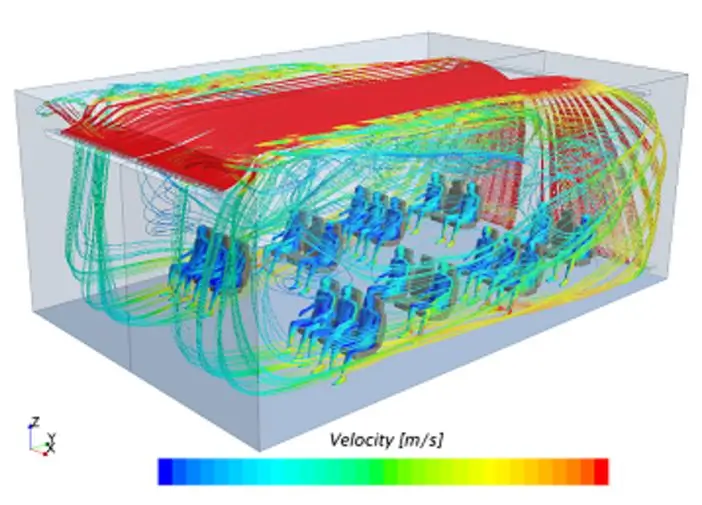
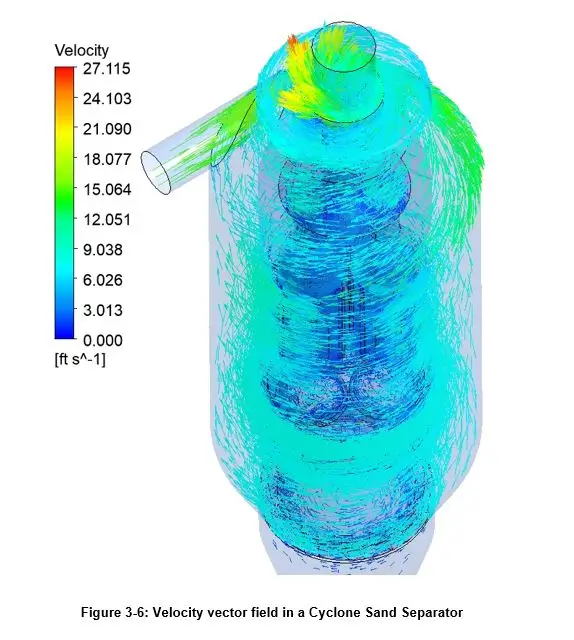
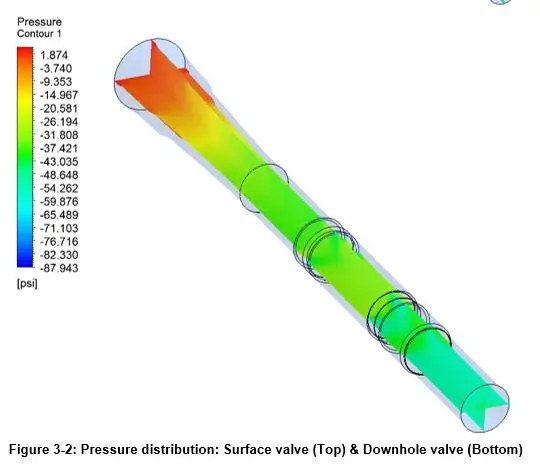
Professional product design firms use Computational Fluid Dynamics (CFD) simulation and Finite Element Analysis (FEA) to test products virtually before a single part is machined. CFD simulation is defined as the use of numerical methods and algorithms to analyze how fluids (gas or liquid) interact with physical structures. FEA, by contrast, is a method of simulating physical stress, heat, and deformation across a structure to predict how it will behave under real operating conditions.
These aren't nice-to-haves. They're the difference between a product that passes first-article inspection and one that fails at 40% of rated load. Firms offering dedicated FEA services and CFD simulation services give you analysis capability that would cost tens of thousands of dollars to replicate in-house.
3. Cost Efficiency That Compounds Over the Project
Outsourcing product design services isn't just about avoiding software license fees, though that matters. It's about the compounding cost benefit across the full development cycle.
When problems are caught in the design phase, they cost a fraction of what they cost at tooling, and a tiny fraction of what they cost post-launch. A 2023 study from the Aberdeen Group found that companies using simulation-driven design reduced engineering change orders by up to 38% compared to those using traditional methods. Catching a wall-thickness problem in a CFD model costs hours. Catching it in a customer's facility costs everything.
And this is where it gets interesting: most product design firms operate on project-based pricing, meaning you pay for the exact scope you need. No overhead, no idle staff, no software seats gathering dust between launches.
4. Your Team Gets to Do What They're Actually Good At
Product development is a specialist discipline. For most companies, it isn't the core business - and treating it like one drains both budget and focus.
When you hand design and engineering work to a firm that does this every day, your internal team gets their time back. Sales teams can focus on customer relationships. Operations can focus on delivery. Leadership can focus on strategy. This division isn't a workaround - it's how high-performing organizations are actually structured.

5. Innovation Doesn't Happen in a Vacuum
Working inside a single industry for years builds deep expertise. It also builds blind spots.
Product design firms work across sectors simultaneously. The structural insight from a downhole drilling tool can solve a problem in a medical instrument. The fluid dynamics knowledge from an exhaust system CFD study can improve a consumer product design. Cross-pollination of this kind - between industries, between material categories, between manufacturing processes - is where genuine innovation comes from.
That sounds obvious. But most companies only experience it after they stop trying to design in isolation.
6. Risk Mitigation That Actually Holds Up
Every new product carries three categories of risk: technical, market, and regulatory. Product design services - when done properly - address all three before they become expensive.
Technical risk is handled through simulation, prototyping, and feasibility analysis. Market risk is addressed through design-for-manufacturability (DFM) reviews and cost modeling. Regulatory risk, especially in industries like medical devices or oil & gas, is managed by firms with experience navigating compliance standards.
Imaginationeering's invention services include structured feasibility work at the front end of development - the phase where most projects either get a realistic path forward or get honestly redirected. That honesty early is worth more than optimism late.
7. Speed to Market Is a Strategy, Not Just a Preference
Being second to market in a fast-moving category isn't neutral. It's a structural disadvantage. Product design firms run parallel workflows - simulation, design iteration, and prototype planning - that a generalist internal team runs sequentially. That compression matters.
Agile product development methodology, as used by professional design firms, treats each sprint as a testable increment rather than a milestone in a linear plan. The result is faster pivots, fewer dead-end detours, and a launch schedule that reflects reality rather than optimism.
8. Customization Isn't a Feature - It's the Whole Point
Off-the-shelf design templates don't exist for serious engineering work. Every project has its own operating environment, cost constraints, manufacturing partners, and end-user requirements.
Experienced product design and development firms don't apply a standard process to every client - they adapt. That means material selection appropriate for your supply chain, tolerance standards calibrated to your manufacturing partner's actual capability, and design revisions driven by your stakeholder feedback, not an internal process checklist.
The Real Question
The question isn't whether product design services provide value. The data, the case studies, and decades of product development history make that clear. The real question is whether the firm you choose has the depth of experience, the simulation capability, and the honesty to tell you when a design needs a rethink rather than just a refinement.
That combination is rarer than it should be. When you find it, protect it.
Frequently Asked Questions
Q: What do product design services include?
Product design services typically cover concept development, CAD modeling, engineering analysis (FEA and CFD), prototyping, design-for-manufacturability review, and project management through to production-ready documentation. Scope varies by firm and project type.
Q: How much do product design services cost?
Q: What's the difference between product design and product development?
Q: When should a company outsource product design instead of hiring in-house?
Q: Can product design services help with patent or invention development?
Blogs